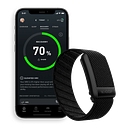
At WHOOP, we're on a mission to unlock human performance and healthspan. WHOOP empowers users to perform at a higher level through a deeper understanding of their bodies and daily lives. Our wearable device tracks key physiological metrics such as heart rate variability, resting heart rate, and sleep quality to provide personalized insights into users' fitness, health, and recovery.
As a Backend Software Engineer II on AI Experiences, you will build on WHOOP’s generative AI capabilities to develop and maintain exciting, member-facing features that drive meaningful health outcomes. You will play a vital role in delivering personalized insights across WHOOP and work alongside experienced engineers, designers, and product managers to help members better understand their health, optimize performance, and gain clarity throughout their WHOOP journey.
RESPONSIBILITIES:
Collaborate with cross-functional team including Product, Design, Analytics, and Data Science to gather technical requirements and deliver impactful infrastructure and toolsLeverage Java, Kafka, AWS, and PostgreSQL to deliver scalable and reliable software solutions and featuresConsistently deliver high-quality code, adhering to best practices in software design and developmentDevelop and maintain observability and monitoring systems to ensure the stability and reliability of deployed features
QUALIFICATIONS:
2-4 years of backend software development experience, ideally in languages like JavaFamiliarity with asynchronous processing systems (Kafka, SQS)Experience in backend development, working on large-scale software systems and RESTful API designExperience in relational database design and development (PostgreSQL)Experience with scalable system design and performance optimizationStrong independent problem-solving skills and the ability to work effectively in a fast-paced, collaborative environmentExcellent communication skills and a commitment to delivering high-quality workA proactive, collaborative team player, eager to take on new challenges, continuously learn, and adapt in a fast-paced, data-informed environment